
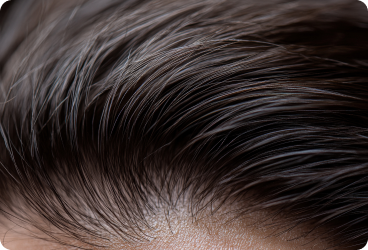
You wash your hair regularly. You're not doing anything obviously wrong. But your scalp still feels waxy a day after showering, there's a persistent itch you can't shake, and your hair looks flat and dull no matter what you do.
This is a fairly common situation, and the culprit is usually scalp build-up. It's not a serious condition in most cases, but it's worth understanding properly because a congested scalp does create real problems for hair growth over time, and the fix is simpler than most people expect.
What scalp build-up actually is
Your scalp naturally produces sebum, the oil that keeps both the skin and hair shaft moisturized. On its own, sebum isn't a problem. The issue develops when sebum accumulates alongside other things: dead skin cells, sweat, mineral deposits from hard water, and the residue left behind by styling products like wax, pomade, and gel.
These substances don't always wash away cleanly with a standard shampoo rinse, particularly if you're using heavy or petroleum-based products. Over time they compact into a layer that sits at the follicle opening, interfering with the skin's natural turnover and creating an environment that's chronically irritated, oily, and poorly ventilated.
Men tend to be more prone to build-up than women for a couple of reasons. Higher androgen levels drive greater sebum production, and styling products marketed to men tend to be heavier and more occlusive than those used in most women's routines. Frequent exercise adds sweat to the mix, which accelerates the cycle.
How it affects hair growth
A clean, balanced scalp is the baseline requirement for healthy hair. When that baseline is compromised by chronic build-up, the effects on the hair cycle are real, if sometimes subtle in the short term.
The most immediate effect is physical. A compacted layer of residue at the follicle opening creates resistance for emerging hairs, making it harder for new strands to push through normally. More significantly, the trapped debris triggers low-grade inflammation around the follicle base. This kind of persistent scalp inflammation is a known disruptor of the hair growth cycle and can shorten the anagen phase, the period during which hair actively grows, while increasing shedding.
Build-up also distorts the scalp's oil regulation. When the skin's surface is congested, sebaceous glands can respond by producing more oil in an attempt to compensate, which compounds the original problem. On the opposite end, aggressive attempts to strip the scalp clean can swing the pendulum toward excessive dryness and irritation.
None of this is likely to cause permanent hair loss on its own in someone with naturally resilient follicles. But in someone already dealing with genetic hair loss or another condition weakening their follicles, a chronically unhealthy scalp environment adds pressure that accelerates the process.
Signs your scalp needs attention
The most common indicators of build-up are a waxy or coated feeling on the scalp shortly after washing, itchiness that doesn't respond to a standard dandruff shampoo, flaking that looks more like dry skin than classic dandruff, and hair that lies flat without much volume regardless of how it's styled. Increased daily shedding is worth paying attention to as well, particularly if it's accompanied by any of the above.
How to clear it
The approach is straightforward and doesn't require an elaborate routine. Consistency matters more than complexity here.
Use a clarifying shampoo weekly
Standard shampoos are formulated for maintenance washing, not for breaking down heavy residue. A clarifying shampoo, used once a week, is significantly more effective at dissolving stubborn build-up. Look for formulations containing salicylic acid or tea tree oil, both of which help break down compacted sebum and residue at the follicle opening. Apply it directly to the scalp, let it sit for a couple of minutes before rinsing, and resist the urge to use it more than once a week as it can dry the scalp out if overused.
Exfoliate the scalp periodically
The scalp sheds dead skin cells just like the rest of the skin on your body, but unlike your face or arms, it rarely gets any mechanical help doing so. A scalp scrub used every one to two weeks helps lift dead skin and product residue that clarifying shampoo alone doesn't fully address. If physical scrubs feel too abrasive, a lightweight chemical exfoliant containing glycolic acid applied to the scalp before washing achieves a similar result more gently. Massage it in with circular motions for a few minutes before rinsing thoroughly.
Rinse more thoroughly than you think you need to
One of the most underrated contributors to build-up is simply not rinsing long enough. Shampoo and conditioner residue left on the scalp compounds over time just like product build-up does. After washing, spend an extra 30 seconds rinsing beyond the point where your hair feels clean. It's a small adjustment that makes a meaningful difference over time.
Reassess your product choices
Heavy waxes, petroleum-based pomades, and thick gels are the most common sources of stubborn residue because they're designed to bond firmly to hair and don't break down easily with water alone. Switching to water-based styling products reduces build-up significantly without requiring a complete change to your routine. If you prefer the hold that heavier products provide, a more thorough wash routine becomes especially important to compensate
When to see a specialist
If you follow a consistent clarifying routine for several weeks and still experience significant flaking, persistent inflammation, or ongoing hair loss, it's worth seeing a dermatologist or trichologist. Seborrheic dermatitis, scalp psoriasis, and fungal infections can look similar to build-up but require targeted prescription treatment to resolve. Self-treating a diagnosed skin condition with clarifying shampoo won't address the underlying cause and may irritate the scalp further.
The bigger picture
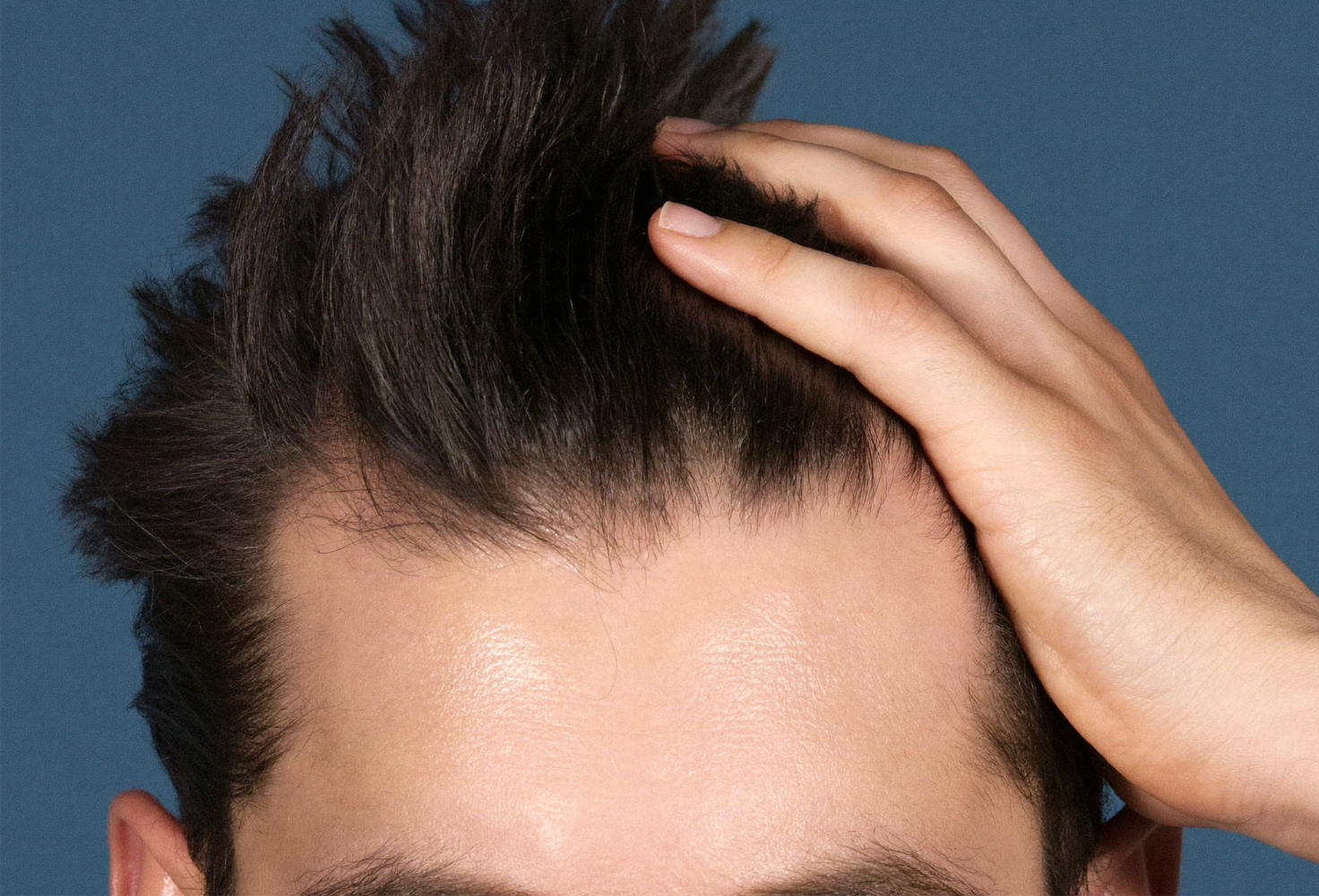
Scalp build-up is common, manageable, and usually reversible with a consistent routine. Addressing it won't regrow hair lost to genetic causes, but it removes a genuine obstacle to the scalp environment your follicles need to function at their best. For anyone already using clinical hair loss treatments, a clean scalp also improves the absorption and effectiveness of topical products.
It's a small piece of the overall picture, but it's one of the easiest to fix.
.svg)