
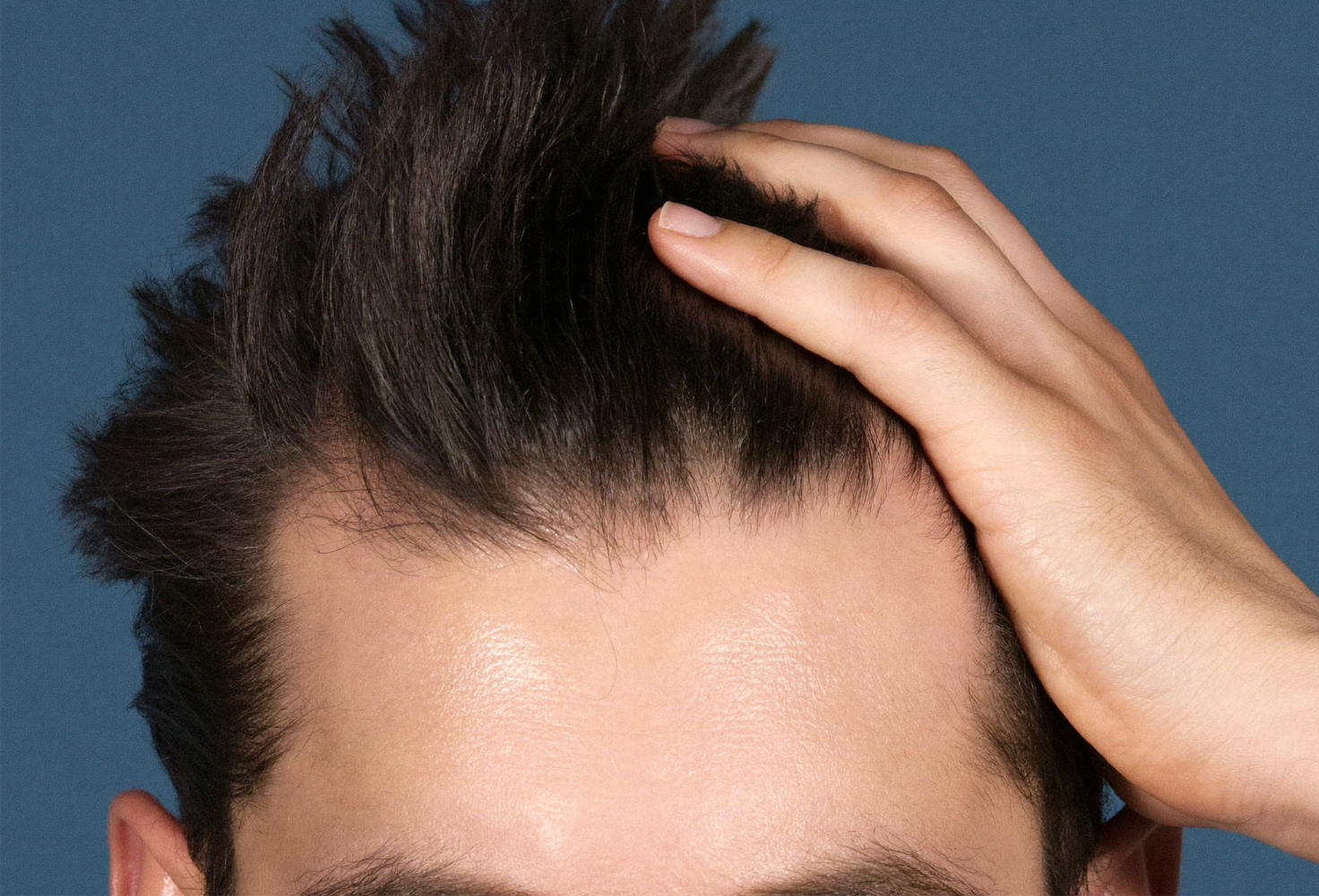
If you've spent any time researching hair loss, DHT comes up early and often. For good reason. Dihydrotestosterone is the primary hormonal driver of androgenetic alopecia, the most common form of hair loss in men, and understanding how it works is the foundation for any treatment approach that's actually going to make a difference.
What DHT is and where it comes from
DHT is an androgen derived from testosterone. An enzyme called 5-alpha reductase converts a portion of circulating testosterone into DHT as a normal part of male hormone metabolism. DHT plays a legitimate role in development and certain physiological functions, but in adulthood it becomes a problem for a specific subset of men: those whose hair follicles carry a genetic sensitivity to it.
In these men, DHT binds to androgen receptors within the scalp follicle and progressively shrinks it over time. The growth phase of the hair cycle shortens with each successive cycle. Hair grows back finer and shorter than the previous strand. Eventually the follicle becomes too miniaturized to produce a visible hair at all and enters dormancy. This process is called follicle miniaturization, and it's the underlying mechanism behind the receding hairline and crown thinning that define male pattern baldness.
The key point is that this is a genetically determined sensitivity rather than a universal response to DHT. Men with low androgen receptor sensitivity in their scalp follicles can have high DHT levels without experiencing significant hair loss. This is why DHT reduction alone doesn't produce identical results in every man, and why the degree of genetic predisposition shapes how aggressively treatment needs to be approached.
Natural approaches to reducing DHT's impact
Pharmaceutical DHT blockers like finasteride are the most clinically proven option, but a number of natural compounds have meaningful evidence behind them and are worth understanding properly rather than dismissing or overstating.
Saw palmetto
Saw palmetto is the most studied natural DHT inhibitor. The extract from the berries of Serenoa repens has demonstrated the ability to inhibit 5-alpha reductase activity, slowing the conversion of testosterone to DHT through a similar mechanism to finasteride, though with considerably less potency. Several clinical trials have found improvements in hair density and reduced shedding with consistent supplementation, making it a credible option for men who want to take a natural-first approach or who want to supplement a clinical protocol.
It's available as an oral supplement and is also found in some topical shampoo formulations, though the evidence base is stronger for oral use.
Pumpkin seed oil
Pumpkin seed oil contains phytosterols that are believed to interfere with DHT production. A randomized, placebo-controlled study published in Evidence-Based Complementary and Alternative Medicine found that men taking 400mg of pumpkin seed oil daily for 24 weeks experienced a 40% increase in hair count compared to 10% in the placebo group. These are meaningful results for a natural compound and place pumpkin seed oil among the more credible natural options in this category.
Green tea
Green tea contains epigallocatechin gallate, a polyphenol that has shown 5-alpha reductase inhibiting activity in laboratory studies and some evidence of protecting follicles from DHT-related damage. The research is less developed than for saw palmetto or pumpkin seed oil in terms of hair-specific clinical trials, but the mechanism is plausible and green tea has a well-established safety profile that makes it a low-risk addition to a broader protocol.
Rosemary oil
Rosemary oil works through a different mechanism than the other compounds here. Rather than inhibiting DHT production directly, it improves scalp circulation, which helps create a more favorable follicle environment. The 2015 study comparing rosemary oil to 2% minoxidil found comparable hair count improvements over six months, with rosemary oil producing significantly less scalp itching. It doesn't address the hormonal cause of androgenetic alopecia, but as a topical complement it has genuine evidence behind it.
Lifestyle factors that influence DHT's impact
Beyond specific compounds, some broader habits affect how aggressively DHT affects the follicle environment.
Scalp inflammation amplifies the damage DHT causes. An inflamed scalp weakens the follicle's structural integrity and creates conditions in which miniaturization accelerates faster than it otherwise would. Keeping the scalp clean, free of product buildup, and free of chronic irritation from harsh products reduces this compounding effect.
Chronic stress elevates cortisol, which disrupts normal hormone metabolism and can exacerbate androgenic activity in ways that accelerate follicle miniaturization in susceptible individuals. Managing stress consistently isn't a substitute for addressing DHT directly, but it removes one unnecessary accelerant from the picture.
Regular scalp massage improves local blood circulation, delivering more nutrients and oxygen to follicles and potentially helping to clear DHT buildup from the immediate follicle environment. There's modest independent evidence for its effect on hair density, and it costs nothing to incorporate.
Keeping natural approaches in perspective
Natural DHT blockers are a legitimate part of the conversation around hair loss, and the evidence for compounds like saw palmetto and pumpkin seed oil is stronger than it's given credit for in mainstream coverage. That said, their potency is meaningfully lower than pharmaceutical options, and for men with significant genetic predisposition or more advanced hair loss, natural approaches alone are unlikely to be sufficient.
The most practical framing is to treat them as a complement to clinical treatment rather than an alternative to it. Used alongside finasteride and minoxidil, natural DHT inhibitors and scalp-supportive compounds add coverage at multiple points in the process. Used alone in someone with moderate to advanced androgenetic alopecia, they're unlikely to hold back a condition that warrants a more direct hormonal intervention.
As with any supplement, checking with a healthcare provider before starting is worthwhile, particularly if you're already on medication or have underlying health conditions that affect hormone metabolism.
.svg)