
.png)
If you smoke or vape and have noticed your hair thinning, it's not a coincidence. Research increasingly links nicotine and tobacco use to accelerated hair loss and the mechanisms go deeper than most people realize. Whether you're a pack-a-day smoker or a casual vaper, understanding how nicotine affects your follicles could be the wake-up call your hair needs.
What happens to your hair when you smoke or vape?
Your hair follicles are among the most metabolically active structures in your body. They require a constant, rich supply of oxygen and nutrients delivered through your bloodstream to produce healthy hair. Nicotine - the active compound in both cigarettes and e-cigarettes - directly disrupts this process in several compounding ways.
1. Nicotine restricts blood flow to the scalp
One of the most well-documented effects of nicotine is vasoconstriction: the narrowing of blood vessels. When you smoke or vape, nicotine causes the small blood vessels (capillaries) that supply your scalp to constrict, reducing blood flow and starving follicles of the oxygen and nutrients they need to thrive.
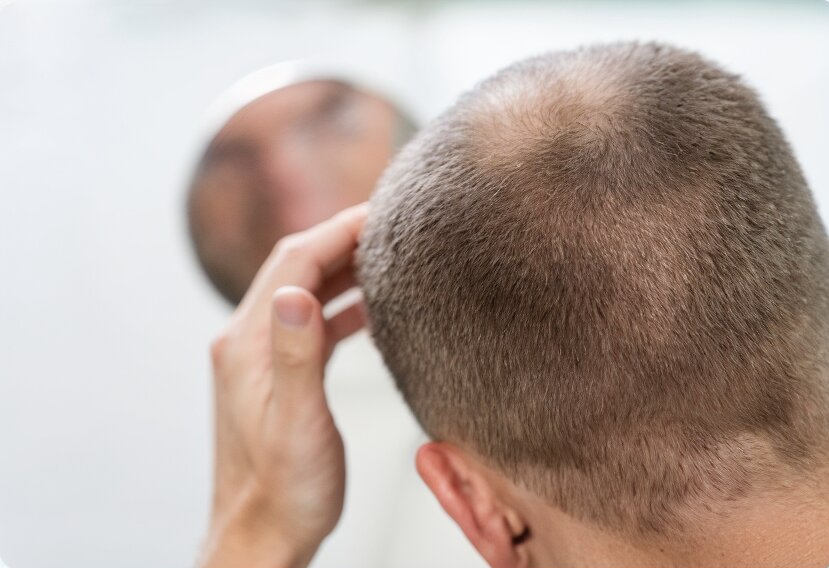
Without adequate blood circulation, hair follicles shrink over time, producing thinner, weaker strands before eventually stopping hair production altogether. It’s a process called follicular miniaturization, which is the hallmark of androgenetic alopecia (pattern hair loss).
Key takeaway: Reduced scalp blood flow = underfed follicles = thinner, weaker hair.
2. Nicotine elevates DHT levels
DHT is the primary hormone responsible for genetic hair loss. Studies suggest that nicotine use can elevate androgen levels, including testosterone and its derivative DHT. In individuals genetically predisposed to hair loss, higher DHT levels significantly accelerate follicle miniaturization.
This means that if you already have a genetic predisposition to hair thinning, smoking or vaping can trigger or speed up hair loss that might otherwise have appeared years later.
3. Oxidative stress and free radical damage
Cigarette smoke contains over 4,000 chemicals, many of which generate free radicals: unstable molecules that cause oxidative stress. This oxidative stress damages the DNA within hair follicle cells, disrupts the hair growth cycle, and can push follicles prematurely into the shedding phase (telogen effluvium).
Even vaping, often marketed as a "cleaner" alternative, exposes users to harmful chemicals such as acrolein, formaldehyde, and heavy metals, all of which contribute to oxidative damage at the cellular level.
4. Smoking disrupts the hair growth cycle
Healthy hair grows in a cycle of three phases: anagen (growth), catagen (transition), and telogen (shedding). Nicotine and the toxins in smoke and vapor interrupt this cycle, shortening the anagen phase and prolonging the telogen phase. This results in more hairs falling out and fewer hairs actively growing at any given time.
5. Inflammation and scalp health
Chronic smoking promotes systemic inflammation throughout the body, including in the scalp. Inflammatory responses around hair follicles are a known contributor to conditions like alopecia areata and scarring alopecias. A persistently inflamed scalp environment is hostile to healthy hair regrowth.
Does vaping cause hair loss too?
Many people switch to vaping believing it's safer for their health. While vaping eliminates some of the combustion-related toxins found in cigarettes, it still delivers nicotine, the core driver of vasoconstriction, elevated DHT, and oxidative stress. The scalp blood flow and hormonal effects of vaping are comparable to smoking when nicotine levels are similar.
The bottom line: vaping is not a hair-safe alternative to smoking.
How much hair loss can smoking cause?
A landmark 2020 study published in JAMA Dermatology found that smokers were significantly more likely to develop androgenetic alopecia compared to non-smokers, with a dose-dependent relationship, meaning the more you smoke, the greater the risk.
Another study found that among men aged 20-35, smokers showed a notably higher prevalence of moderate to severe hair loss than their non-smoking peers of the same age.
Can quitting smoking reverse hair loss?
The good news, quitting smoking can meaningfully improve scalp health. Once nicotine is out of your system, blood circulation begins to normalize, oxidative stress decreases, and inflammation subsides. Many former smokers report a reduction in hair shedding within a few months of quitting.
However, if hair follicles have been significantly miniaturized or permanently damaged, quitting alone may not fully reverse hair loss. This is where a targeted hair loss treatment protocol becomes critical.
Treating nicotine-related hair loss with Headin
At Headin, we understand that hair loss rarely has a single cause. Our science-backed approach combines clinically proven active ingredients with a personalized protocol designed to:
- Restore scalp blood flow with vasodilating ingredients
- Block DHT at the follicle level
- Reduce oxidative stress with antioxidant-rich formulations
- Reactivate dormant follicles and extend the anagen (growth) phase
Whether your hair loss is driven by genetics, lifestyle factors like smoking, or a combination of both, Headin's targeted treatments are formulated to address the root causes, not just the symptoms.
The Bottom Line
Smoking and vaping are silent accelerators of hair loss. Through vasoconstriction, elevated DHT, oxidative stress, and chronic inflammation, nicotine creates a hostile environment for hair follicles. The earlier you take action (by quitting and adopting a proven hair loss treatment) the better your chances of preserving and regrowing your hair.
Your follicles are depending on you. Give them the environment they need to thrive.
Ready to take back control of your hair? Explore Headin's hair loss solutions

.svg)