

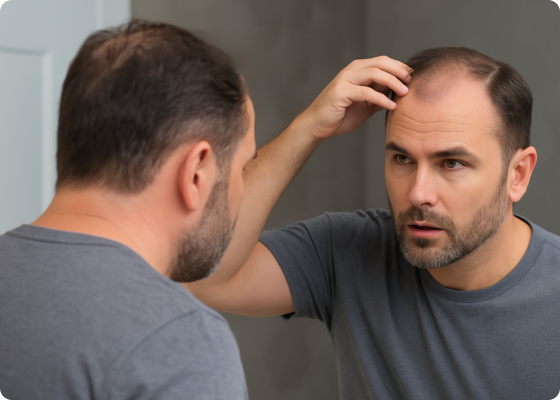
You're not neglecting your hair. You wash it, you style it, you work out regularly and try to stay on top of your grooming. But something has shifted. Your scalp feels itchy or tight, there's persistent greasiness that returns faster than it should, and your hair looks noticeably thinner or flatter than it did a year ago.
The issue usually isn't what you're doing wrong in any dramatic sense. It's the accumulation of everyday habits that, individually, seem harmless but collectively create a scalp environment that's working against healthy hair growth.
Why scalp health matters more than most people realize
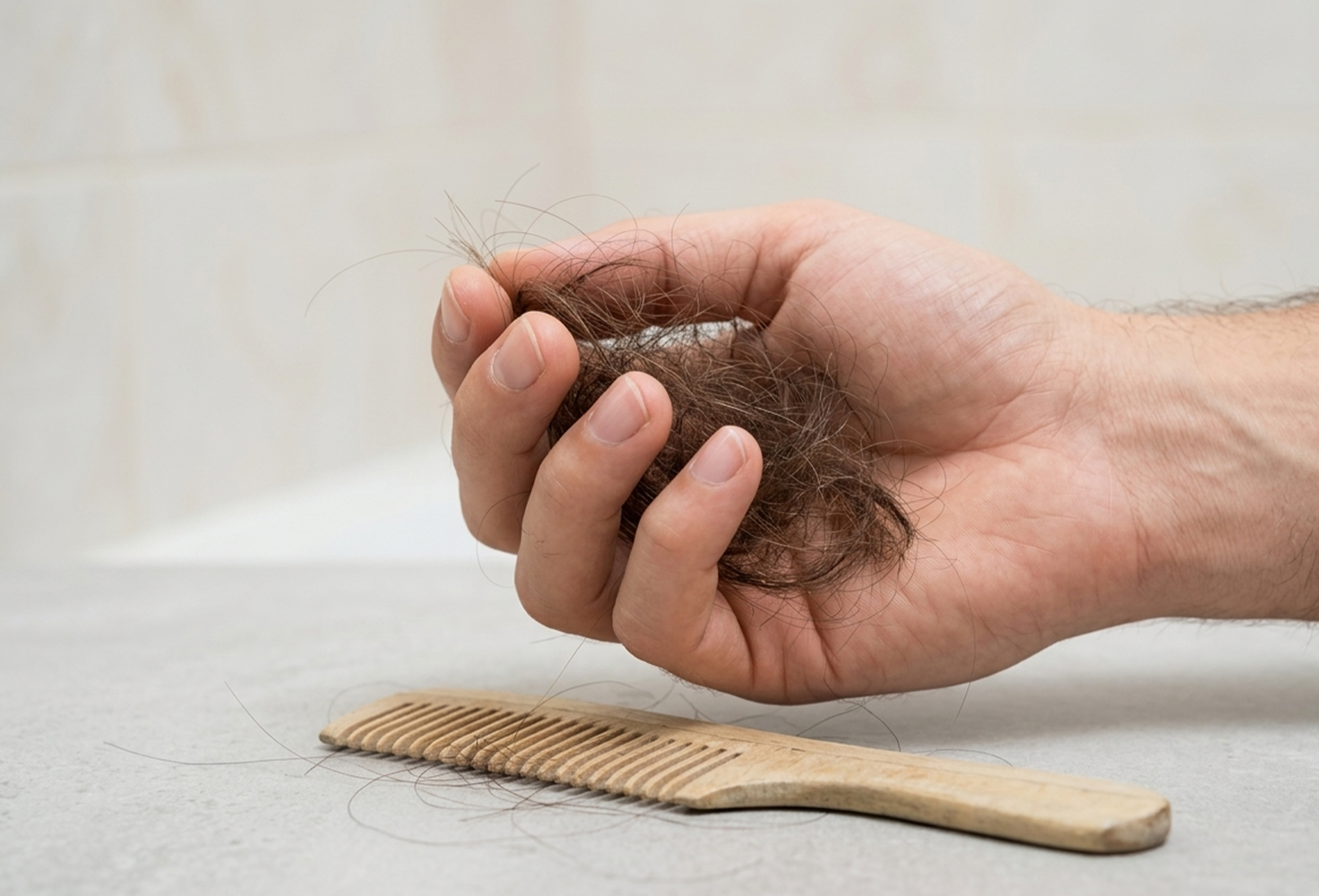
The scalp is where hair growth either thrives or struggles. Follicles depend on clean, well-circulated, properly nourished tissue to produce strong, healthy strands. When the scalp is chronically inflamed, congested, or thrown out of balance, follicles operate under stress. Over time that translates into weakened hair, increased shedding, and, in someone already predisposed to hair loss, an accelerated version of what was going to happen anyway.
Men are particularly prone to scalp issues because higher androgen levels drive greater sebum production compared to women, which means more oil in the baseline environment before lifestyle factors are even considered. Add frequent workouts, heavy styling products, and chronic work stress to that picture and it becomes clear why scalp problems are so common.
Stress and the scalp
The relationship between psychological stress and scalp health operates through a fairly direct hormonal pathway. When cortisol levels are chronically elevated, sebaceous glands respond by producing more oil. An overly oily scalp creates conditions that favor bacterial and fungal overgrowth, inflammation around the follicle base, and a general disruption of the skin's microbiome balance.
Beyond that, sustained high stress can push a significant portion of hair follicles into the resting phase simultaneously, the condition known as telogen effluvium, resulting in diffuse shedding that typically appears two to three months after the stressful period peaks.
Managing stress is often treated as separate from hair care, but for scalp health they're directly connected. Consistently poor sleep, chronic work pressure, and the absence of genuine recovery time all show up on the scalp eventually. Scalp massage is worth incorporating here not just as a relaxation technique but because there's reasonable evidence that regular mechanical stimulation of the scalp improves local circulation and supports follicle health.
Sweat and post-workout scalp care
Exercise is good for overall health and, through improved circulation, broadly beneficial for the scalp. The problem isn't the workout; it's what happens afterward if you don't address the sweat.
When sweat sits on the scalp for extended periods it mixes with sebum, dead skin, and any styling product residue already present. This combination creates an environment that encourages bacterial overgrowth and fungal activity. The signs are usually itching or a mild burning sensation that appears after training, hair that looks dull and greasy sooner than expected, and occasionally small breakouts or folliculitis along the hairline.
The fix is simple: rinse your scalp as soon as reasonably possible after intense exercise. A full shampoo isn't always necessary, but rinsing with water removes the surface sweat before it has time to compound with everything else sitting on the scalp. If you train daily, alternating between a gentle sulfate-free shampoo and water-only rinses prevents over-stripping the scalp while still managing the post-workout buildup.
Styling products and follicle congestion
The styling products most commonly used by men, thick waxes, petroleum-based pomades, and heavy gels, are specifically designed to grip the hair shaft and hold through the day. That adhesive quality doesn't disappear at wash time. These products resist water and don't break down easily under a standard shampoo, which means residue accumulates at the follicle opening over days and weeks of repeated use.
The practical consequences are congested follicles, persistent surface greasiness, and a layer of debris that creates ongoing low-grade inflammation. Switching to water-based styling products makes a meaningful difference because they rinse clean far more easily. Keeping product application focused on the mid-lengths and ends of the hair rather than the scalp itself also reduces the amount of residue accumulating at the follicle level. For anyone committed to heavier products, a weekly clarifying shampoo is non-negotiable to prevent cumulative buildup.
A practical routine for keeping the scalp healthy
The goal is a consistent baseline rather than an elaborate regimen. Most men see significant improvement from a few straightforward adjustments.
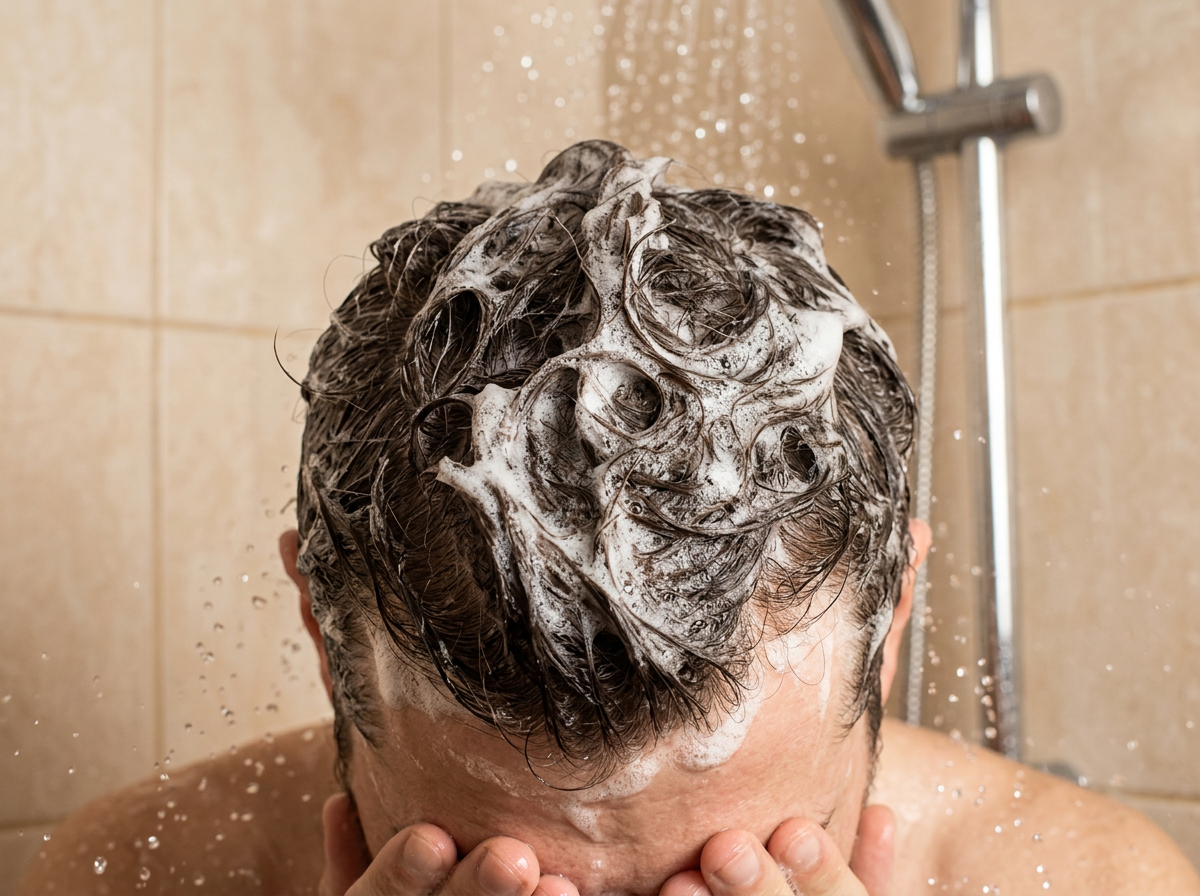
Washing frequency and product choice matter most. A gentle, pH-balanced shampoo used several times a week handles day-to-day oil and sweat management. Once a week, swap that out for a clarifying shampoo to dissolve product residue that regular washing doesn't fully address. Look for formulations containing salicylic acid or tea tree oil, both of which are effective at breaking down compacted sebum and debris without being unnecessarily aggressive on the skin.
Weekly scalp exfoliation, whether with a physical scrub or a glycolic acid tonic applied before washing, helps clear the dead skin accumulation that contributes to congestion. Spend a few minutes massaging it in before rinsing. The massage component has its own value beyond exfoliation, as the mechanical stimulation promotes blood flow to the follicle bed.
After washing, a lightweight scalp serum or tonic containing niacinamide, aloe vera, or tea tree oil helps calm any residual irritation and supports the skin barrier without adding weight or greasiness. Apply it to the scalp, not the hair shaft.
The lifestyle side, managing stress, sleeping consistently, staying hydrated, and eating enough protein and micronutrients, feeds directly into scalp function in ways that no topical product fully compensates for. It's worth treating these as part of the routine rather than separate health considerations.
When the routine isn't enough
If you've tightened up your scalp care consistently and still experience significant flaking, persistent inflammation, or hair loss that's progressing faster than expected, that's the point to consult a dermatologist or trichologist. Seborrheic dermatitis, psoriasis, and fungal infections can mimic the symptoms of general build-up but require targeted prescription treatment. And if thinning is the primary concern, scalp health is only one part of the picture.


.svg)