

Everyone has a theory about hair loss. Your uncle swears it came from wearing a baseball cap. Someone on a forum convinced you that the right shampoo will fix it. A well-meaning family member is confident it skips a generation.
Most of these theories are wrong, and some of them are actively getting in the way of people taking the kind of action that would actually help. Misinformation about hair loss doesn't just cause unnecessary anxiety; it delays treatment during the window when treatment works best. Here's what science actually says.
Myth 1: wearing hats causes baldness
This is probably the most persistent hair loss myth in circulation, and it has no basis in biology.
Your hair follicles receive oxygen and nutrients through the blood vessels in your scalp, not from the air around them. A hat sitting on your head has no effect on that supply. It doesn't compress the follicle, restrict blood flow in any meaningful way, or alter hormone levels.
The only scenario where headwear becomes a real concern is if it's worn so tightly, so consistently, that it creates significant friction and tension on the hair shaft itself. That can cause a type of mechanical hair loss called traction alopecia, but that's physical breakage rather than the hormonal follicle damage that drives pattern baldness. A well-fitting cap, worn normally, is not a threat to your hairline.
Myth 2: not washing your hair causes hair loss
Skipping washes won't trigger pattern baldness, but that doesn't mean scalp hygiene is irrelevant to hair health.
When you go too long without washing, sebum, dead skin cells, and product residue accumulate at the follicle opening. Over time, this buildup can create low-grade inflammation around the follicle, which isn't a direct cause of permanent hair loss but does create a less-than-ideal environment for healthy growth. An inflamed, congested scalp tends to produce weaker strands and can contribute to increased shedding.
The genetic and hormonal processes driving androgenetic alopecia will proceed regardless of how often you wash your hair. But keeping your scalp clean removes one unnecessary stressor from follicles that may already be under pressure from other causes.
Myth 3: hair loss only happens to older men
Male pattern baldness is driven by genetics and DHT sensitivity, not age. Age influences the degree of hair loss and how far it progresses, but it doesn't determine whether it happens.
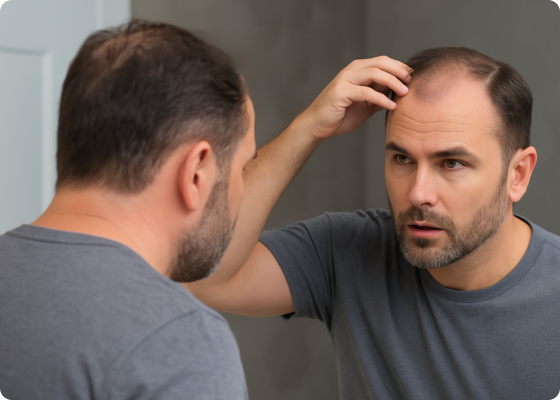
A significant number of men begin noticing a receding hairline or thinning crown in their early to mid-twenties. Some show the first signs even younger. The earlier hair loss begins, the more aggressively it tends to progress without intervention, which makes early awareness genuinely important rather than something to dismiss as premature worry.
If you're in your twenties and noticing changes, that's not too early to look into treatment options. It's probably the right time.
Myth 4: stress is the main reason people go bald
Stress can cause hair loss, but the kind it causes is almost always temporary.
Severe physiological or emotional stress can trigger telogen effluvium, a condition where a large proportion of follicles are pushed prematurely into the resting phase. The result is diffuse, often dramatic shedding that typically appears two to three months after the stressful event. In most cases, once the underlying stressor is resolved, the hair cycle normalizes and the shed hair grows back.
What stress doesn't do is permanently destroy follicles or cause the progressive, patterned hair loss associated with androgenetic alopecia. That's driven by genetics and DHT. Stress can accelerate hair loss in someone who is already genetically predisposed, but it is not itself the cause of permanent baldness.
Myth 5: cutting your hair makes it grow faster
Trimming your hair has no effect on the rate at which it grows. Growth is determined entirely by what's happening at the follicle level, deep within the scalp, and scissors don't reach that far.
What regular trims do accomplish is removing split ends and breakage-prone damaged sections, which makes hair look and feel healthier and can improve the appearance of fullness. That's worth doing, but it should be understood for what it is: maintenance, not growth stimulation. If you want to influence actual growth rate and density, the levers to pull are nutrition, scalp health, and where applicable, clinically proven treatments.
Myth 6: baldness comes from your mother's side
This one has a grain of truth buried in a significant oversimplification.
The androgen receptor gene, which plays a central role in how sensitive your follicles are to DHT, is located on the X chromosome, which you inherit from your mother. This is the origin of the "look at your maternal grandfather" advice. But genetic research has identified dozens of additional genes across multiple chromosomes that influence hair loss, and you inherit chromosomes from both parents.
In practice, family history on both sides of the family is relevant. If your father, paternal grandfather, or other male relatives on your father's side experienced significant hair loss, that's meaningful information, not irrelevant because the gene in question came from your mother.
Myth 7: shampooing too often makes your hair fall out
Washing your hair doesn't cause shedding; it reveals shedding that was already happening.
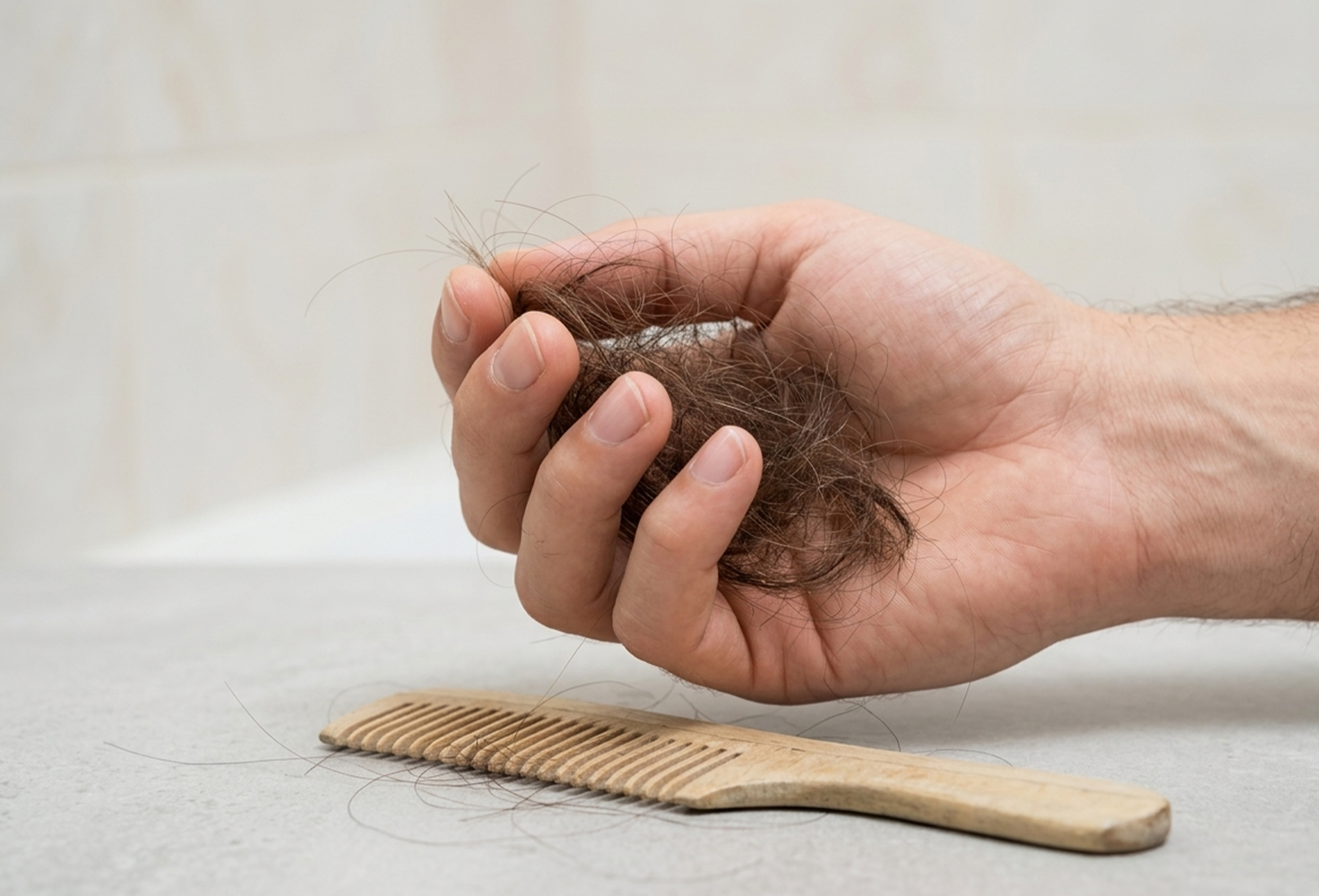
The average person loses between 50 and 100 hairs per day as part of the normal hair cycle. Many of those hairs detach from the follicle but remain tangled in the rest of your hair until something dislodges them. Shampooing, which involves water, massage, and movement, releases those accumulated loose hairs all at once. When you see them collecting in your hands or on the shower floor, it looks alarming, but it's not a sign that the washing is causing the loss.
In fact, regular cleansing keeps the scalp environment healthier and is generally supportive of hair growth rather than a threat to it.
Myth 8: helmets cause hair loss
The logic here mirrors the hat myth: the idea that covering the scalp somehow suffocates or weakens the follicle. It doesn't.
Prolonged use of a poorly fitting, poorly ventilated helmet can cause scalp irritation or minor bacterial buildup from trapped sweat, which is worth addressing for general hygiene reasons. But this doesn't translate to permanent follicle damage or pattern hair loss. Keeping your gear clean and properly fitted is sensible advice for skin health, not a hair loss prevention strategy.
Myth 9: hair loss is a men's issue
Female pattern hair loss is extremely common and substantially underreported, in part because the pattern looks different and tends to be less visible in its earlier stages.
Women with androgenetic alopecia typically experience diffuse thinning across the crown and a widening of the part line rather than the defined recession seen in men. It's driven by the same underlying mechanisms, genetics and androgen sensitivity, though the hormonal picture is more complex in women. Thyroid dysfunction, hormonal shifts from pregnancy or menopause, and nutritional deficiencies all contribute more frequently to hair loss in women than is generally appreciated.
The underdiagnosis of female hair loss means many women wait longer than they should before seeking treatment, which reduces the range of options available.
Myth 10: once hair loss starts, nothing can be done
This is the most damaging myth on the list because it's the one most likely to prevent people from acting.
The reality is that hair loss treatment has a strong evidence base. Finasteride, which works by blocking the conversion of testosterone to DHT, has been shown to halt progression and stimulate regrowth in the majority of men who take it consistently. Minoxidil improves scalp circulation and extends the growth phase of the follicle, producing measurable improvements in density. Used together, these two treatments are significantly more effective than either alone.
Beyond these core options, low-level laser therapy, platelet-rich plasma treatment, and microneedling all have clinical support as adjunct therapies. None of them are miracle cures, and none of them work better than early intervention does. The follicles most likely to respond to treatment are those that have been miniaturized but not permanently destroyed, which is exactly the window that most people have access to if they act when they first notice changes.
The real takeaway
The causes of hair loss are biological. Genetics, hormones, nutritional status, and scalp health are the variables that matter. Hats, shower frequency, and haircut schedules are not. Understanding this distinction matters because it directs attention toward the factors that are actually worth addressing and away from the ones that are just noise.
If you're noticing thinning and haven't yet looked into what's driving it, that's the most useful thing you can do next.



.svg)