
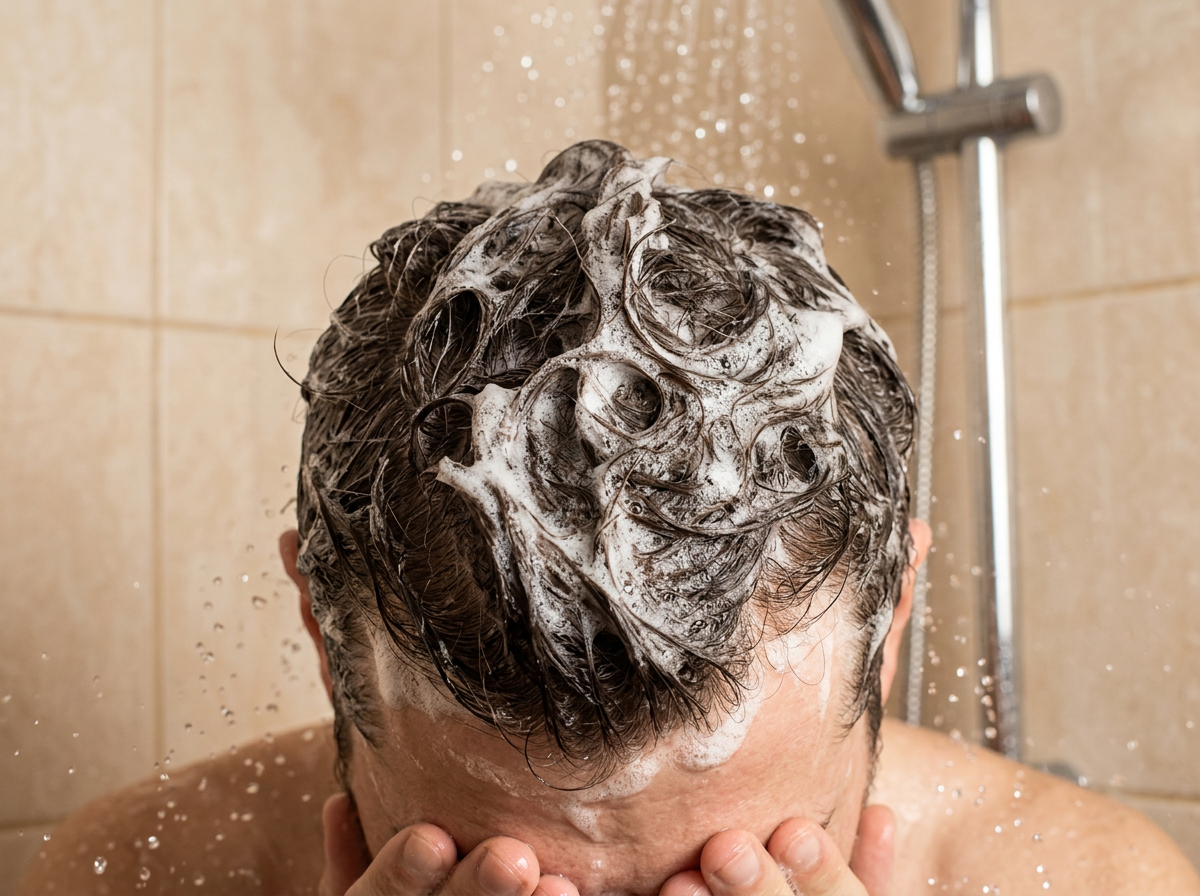
The hair growth shampoo category is one of the more aggressively marketed corners of the grooming industry, and for good reason. Hair loss creates genuine anxiety, and a shampoo promises an accessible, low-effort solution. The problem is that the gap between what these products claim and what they can realistically deliver is significant, and most of the marketing isn't upfront about that gap.
The honest answer is that shampoos can play a legitimate supporting role in a hair loss protocol, but they cannot do the heavy lifting on their own. Understanding exactly why clarifies both what to look for in a shampoo and why it shouldn't be your primary strategy.
What a shampoo can and can't do
The fundamental limitation of any rinse-off product is contact time. A shampoo sits on your scalp for a minute or two before being washed away. That's long enough to cleanse the surface, deliver some topical benefit to the skin, and potentially reduce certain substances present on the scalp. It is not long enough to meaningfully penetrate the follicle, alter hormonal activity at a systemic level, or reverse the miniaturization process driving androgenetic alopecia.
Hair follicles affected by pattern baldness are shrinking because of a sustained hormonal process involving DHT. A shampoo cannot change that dynamic in any clinically meaningful way. It cannot regrow hair on an area where follicles have already become dormant, and it cannot substitute for the treatments that address the root cause.
What it can do is maintain a healthier scalp environment. Removing sebum, dead skin, product buildup, and surface debris prevents the low-grade follicle congestion and inflammation that compounds other causes of hair loss. A clean, well-maintained scalp isn't a treatment for androgenetic alopecia, but it removes one layer of unnecessary stress on follicles that may already be under hormonal pressure. For someone using topical treatments like minoxidil, a clean scalp also improves absorption and effectiveness.
Ingredients worth actually looking for
Most hair growth shampoos are trading on the general category rather than any specific active ingredient. A few ingredients have enough research behind them to be worth seeking out.
Ketoconazole is the most clinically significant. Originally developed as an antifungal for conditions like seborrheic dermatitis, it has demonstrated anti-androgenic properties in several studies, showing an ability to interfere with the DHT pathway at the scalp level. A number of small studies have found that ketoconazole shampoo used regularly can produce modest improvements in hair density. It's not comparable to finasteride, but for a rinse-off product its mechanism is more substantive than most.
Caffeine has some legitimate research behind it showing that it can stimulate follicle activity and may counteract some of DHT's growth-suppressing effects when applied topically. The contact time issue applies here too, but caffeine is one of the more bioavailable compounds in shampoo formulations and penetrates the follicle more readily than many other ingredients.
Saw palmetto is a botanical DHT inhibitor with a reasonable body of supporting evidence in both oral and topical forms. In a shampoo it functions as a mild complement to other scalp-focused strategies rather than a meaningful standalone treatment for androgenetic alopecia.
Rosemary oil has attracted genuine scientific attention after a 2015 study found it comparable to 2% minoxidil for increasing hair count in men with androgenetic alopecia. The comparison was to the weaker 2% concentration rather than the standard 5%, but the mechanism, improved scalp circulation through vasodilation, is legitimate and worth noting.
Biotin in a shampoo is largely cosmetic. It coats the hair shaft and can make existing hair appear thicker and feel stronger, but it doesn't penetrate the follicle in any meaningful way and won't influence hair loss progression. Biotin supplementation is a separate conversation with its own evidence base, but don't buy a shampoo primarily because it contains biotin.
How to use a shampoo so the active ingredients actually have time to work
The most consistent mistake people make with medicated or active-ingredient shampoos is treating them like a regular shampoo, applying, working into a lather, and rinsing within thirty seconds. If you're paying for a product specifically for its active ingredients, that contact time is too short for much absorption to occur.
Leaving the lather on the scalp for two to three minutes before rinsing gives the active compounds more time to interact with the skin. It's a small change that meaningfully improves the return on whatever you're using. Applying it directly to the scalp rather than primarily working it through the hair length also helps, since the follicle openings are what benefit most.
Avoiding sulfate-heavy formulas is worth doing regardless of what other ingredients are present. Sodium lauryl sulfate and similar surfactants are effective cleansers but can strip the scalp's natural oil barrier and cause chronic irritation, which is counterproductive if scalp health is part of the goal.
Consistency over months matters more than short-term intensity. Scalp health improvements are cumulative and the hair growth cycle is slow. Four to six months is the realistic minimum timeframe for evaluating whether a shampoo is contributing meaningfully to your overall protocol.
Where shampoo fits in a broader approach
The framing that works is to think of a shampoo as maintaining the foundation rather than driving the results. For someone not yet dealing with significant hair loss, a well-chosen shampoo with active ingredients like ketoconazole or rosemary oil is a reasonable preventive measure. For someone actively treating androgenetic alopecia, it's a sensible complement to finasteride and minoxidil that supports scalp health and improves the conditions in which those treatments operate.
What it isn't, regardless of how it's marketed, is a substitute for treatments that address the hormonal cause of follicle miniaturization. The biology doesn't allow for that, and a shampoo that claims otherwise is overstating what any rinse-off product is physically capable of doing.



.svg)